
Machining swarf, pressed into furnace-ready briquettes.
We take loose turnings from machining shops, shred them, and cold-press them into dense cylinders that a foundry can charge straight into the furnace.
- Briquette
- Available on request
- Packaging
- FIBC big bags or bulk
- Quality control
- Handheld XRF, per lot
What we do
Machine shops, turning and milling operations and scrap collectors send us loose metal turnings — the tangled swarf that comes off a lathe or a mill. It arrives oily, bulky and awkward to store, which is precisely the problem it creates for whoever is holding it.
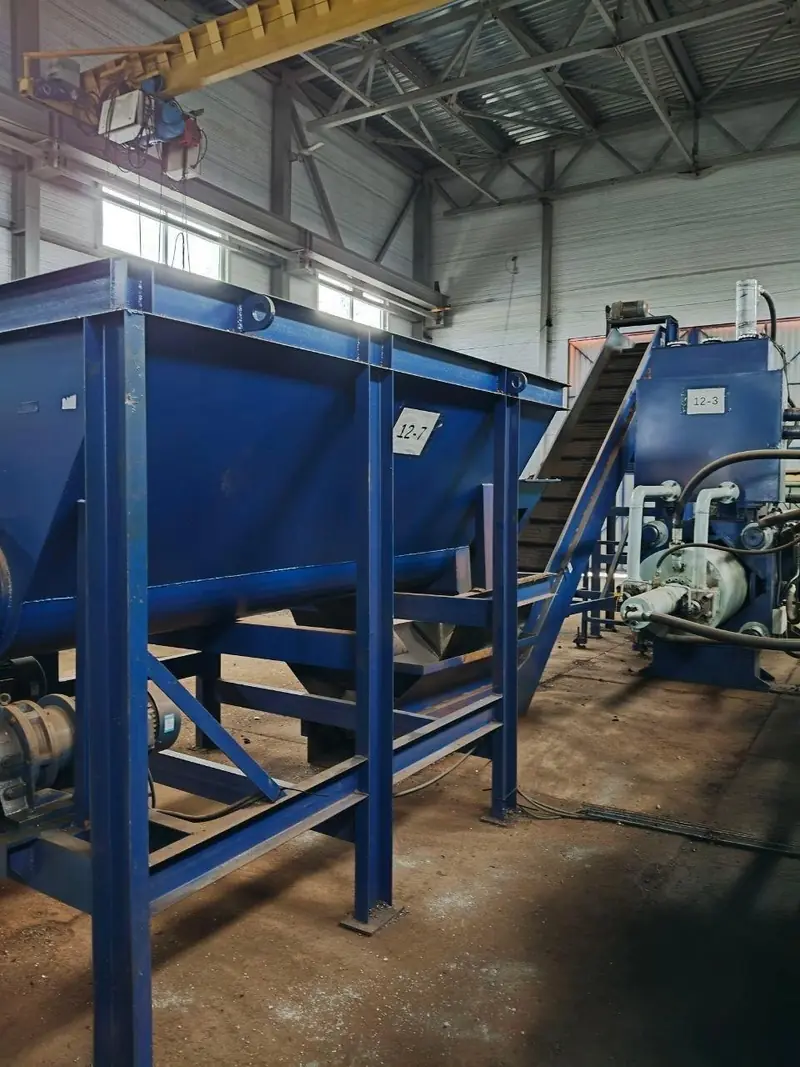
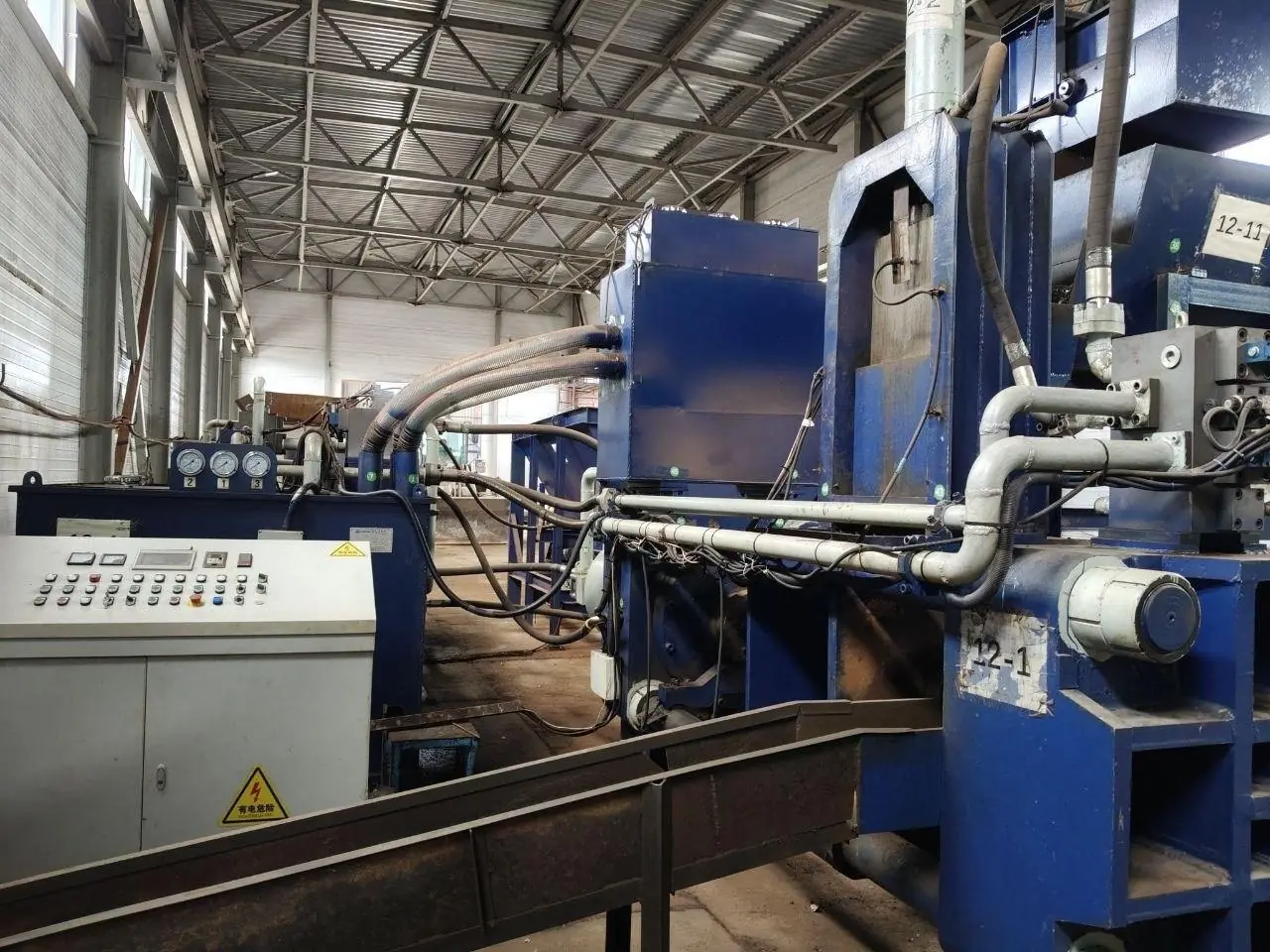
The material goes through a double-shaft shredder that breaks up nests and long strings, then along a chain conveyor into a buffer hopper that evens out the flow into a hydraulic press. It is compacted cold. No binder is used and nothing is added to the metal.
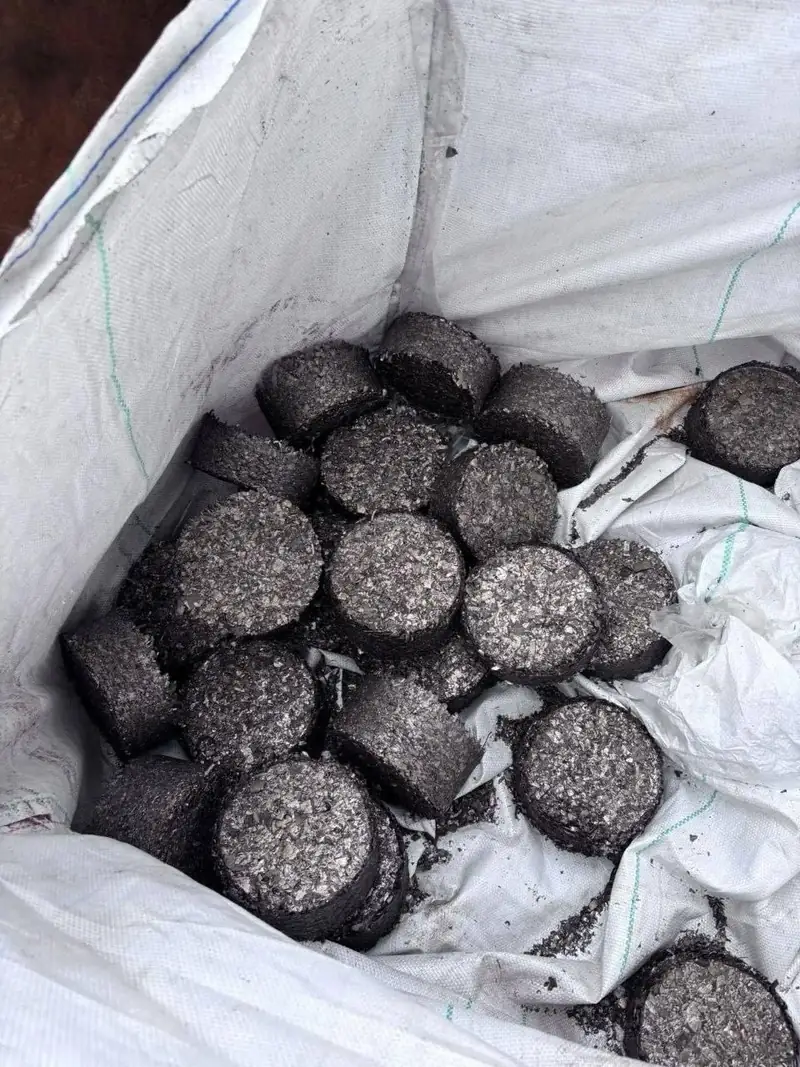
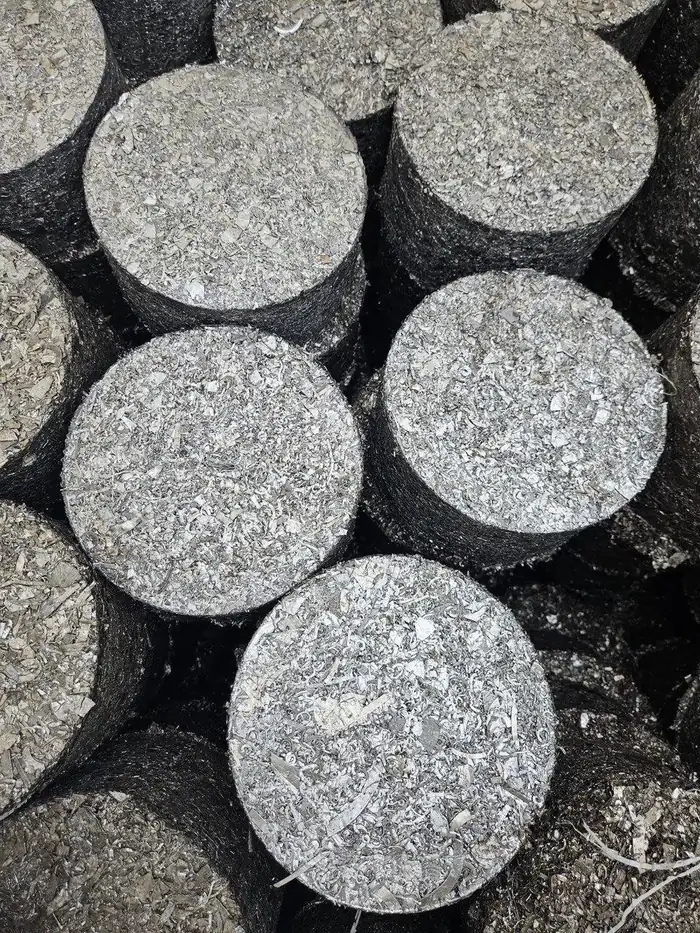
What comes out is a dense cylinder that survives handling, stacking and transport. Foundries, steel mills and scrap traders buy it as furnace charge, by the lot, with an XRF reading taken from the finished briquettes and supplied with the material.
Process
Four stages, in order, from delivered swarf to loaded briquettes.
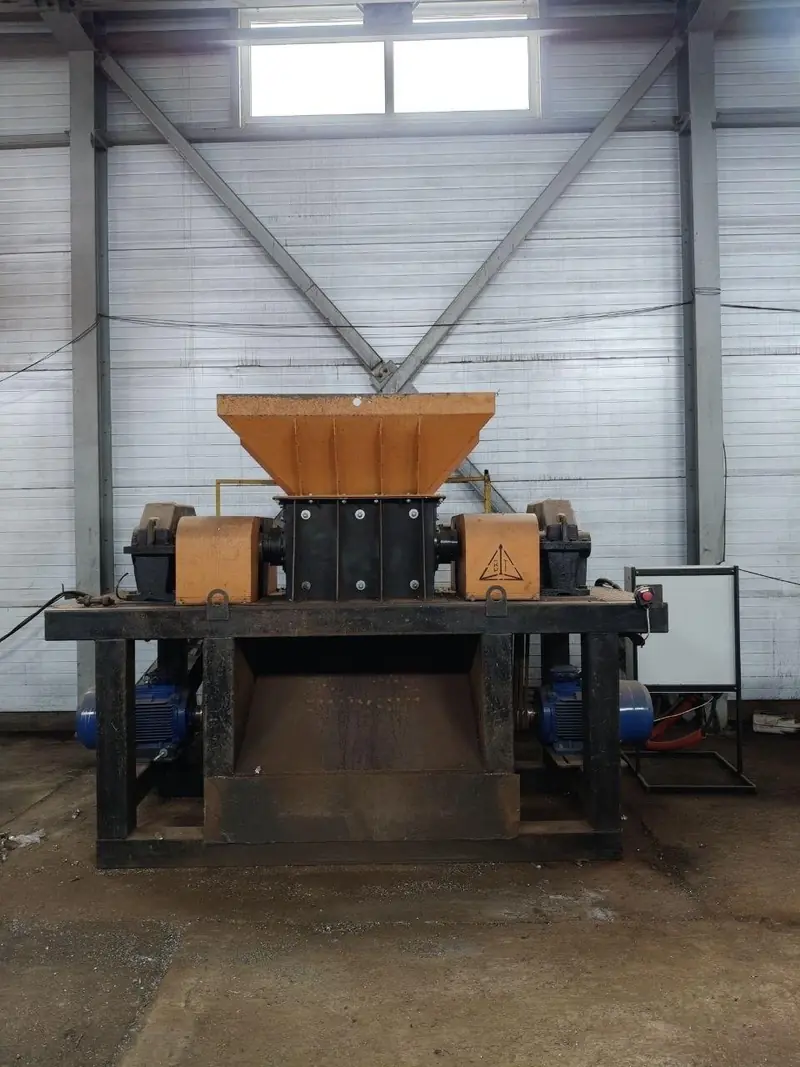 STEP 1
Shred
A double-shaft shredder breaks tangled nests and long strings down to a consistent feed size. Turnings that would bridge or jam a press go in here first.
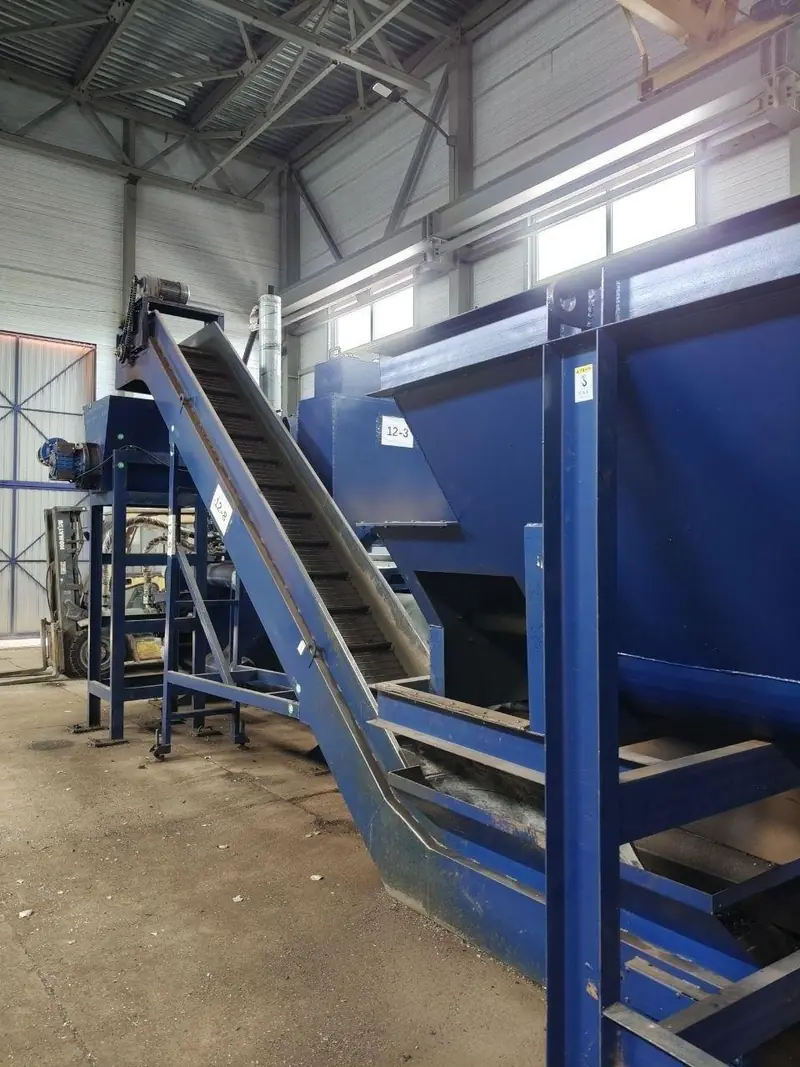 STEP 2
Convey and buffer
A chain conveyor lifts the shredded material into the receiving hopper. A larger buffer hopper above the press line evens out the flow so the press runs against a steady feed rather than in bursts.
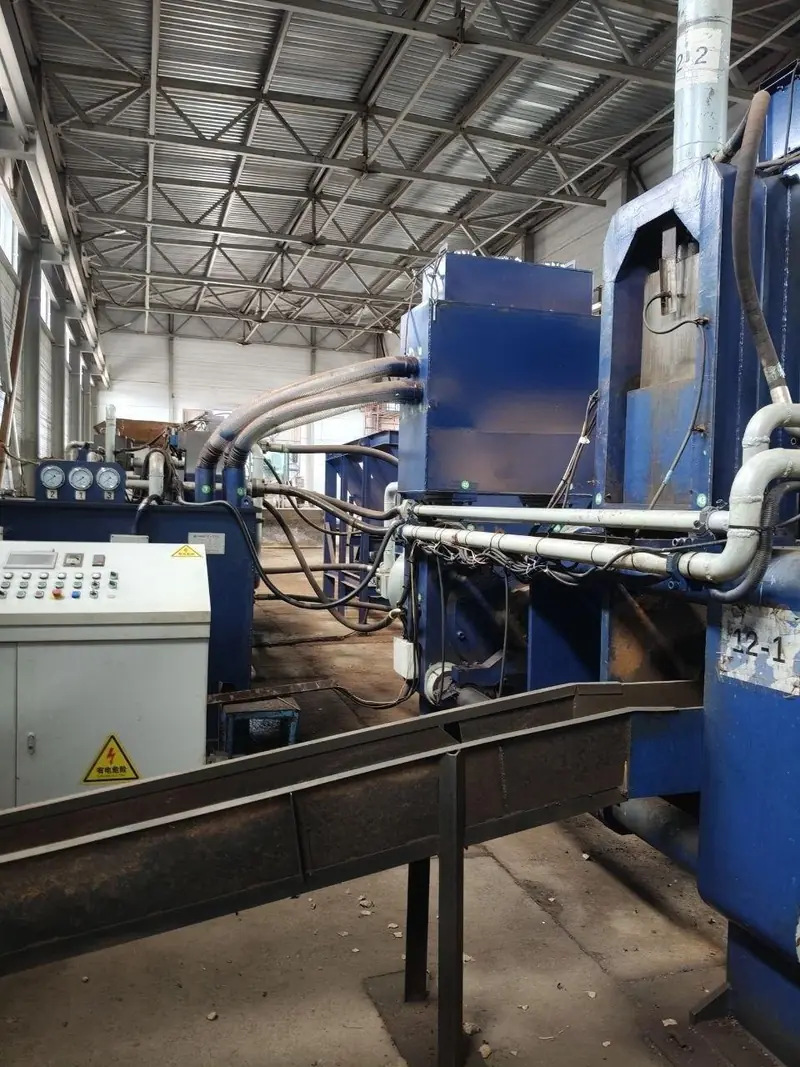 STEP 3
Press
A hydraulic press compacts the material cold into cylinders. Pressure alone holds the briquette together — there is no binder and no heating step.
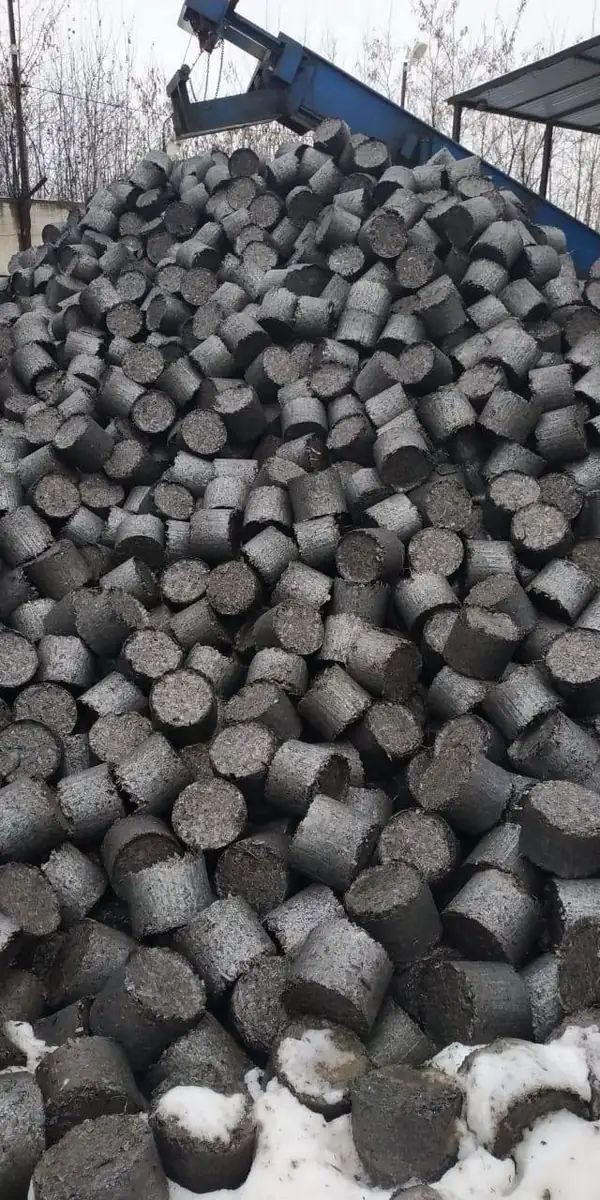 STEP 4
Bag and load
Finished briquettes are filled into FIBC big bags for palletised shipment, or piled in bulk and loaded direct.
Product
Specification
- Form
- Cylindrical, cold-pressed
- Binder
- None — pressure only
- Diameter × height
- Available on request
- Weight per briquette
- Available on request
- Bulk density
- Available on request
- Residual oil / moisture
- Available on request
- Accepted feedstock
- Available on request
- Packaging
- FIBC big bags, or bulk
- Monthly capacity
- Available on request
Indicative analysis
Handheld XRF reading taken from the pressed face of a finished briquette, sample #214, 4.3 second measurement.
| Element | % | ±2σ |
|---|---|---|
| FeIron | 80.83 | 0.307 |
| CrChromium | 10.95 | 0.132 |
| NiNickel | 6.34 | 0.176 |
| MnManganese | 0.81 | 0.104 |
| MoMolybdenum | 0.28 | 0.008 |
| TiTitanium | 0.26 | 0.065 |
| CuCopper | 0.23 | 0.049 |
| NbNiobium | 0.01 | 0.002 |
Mercury (Hg): below the instrument limit of detection.
Indicative reading from a single sample lot, not a guaranteed specification. Composition varies between lots and is measured again on each shipment.
The instrument returned No Match against its grade library. This is mixed stainless-family swarf, not a clean single grade, and we do not sell it as one.
Why briquettes instead of loose turnings
The same metal, in a form that costs less to move and loses less in the melt.
Freight
Loose turnings are mostly air. Compacted, the same tonnage takes up a fraction of the space, so a truck or a container carries far more metal per trip and the cost of moving each tonne falls with it.
Recovery
Loose chips carry enormous surface area into the furnace, oxidise quickly and burn off. A dense briquette exposes very little surface to the furnace atmosphere, so more of what you charge ends up in the bath.
Storage and handling
Briquettes do not drip oil across a yard and do not settle into the fine, fire-prone fluff that loose swarf produces. They stack instead of sprawling, and they can be moved with ordinary equipment.
No preparation
Briquettes go straight into an induction or arc furnace as charge material. There is no drying stage, no separate handling step and no chip-specific equipment to buy or run.
The plant
The line as it stands, photographed on site.
Quality control
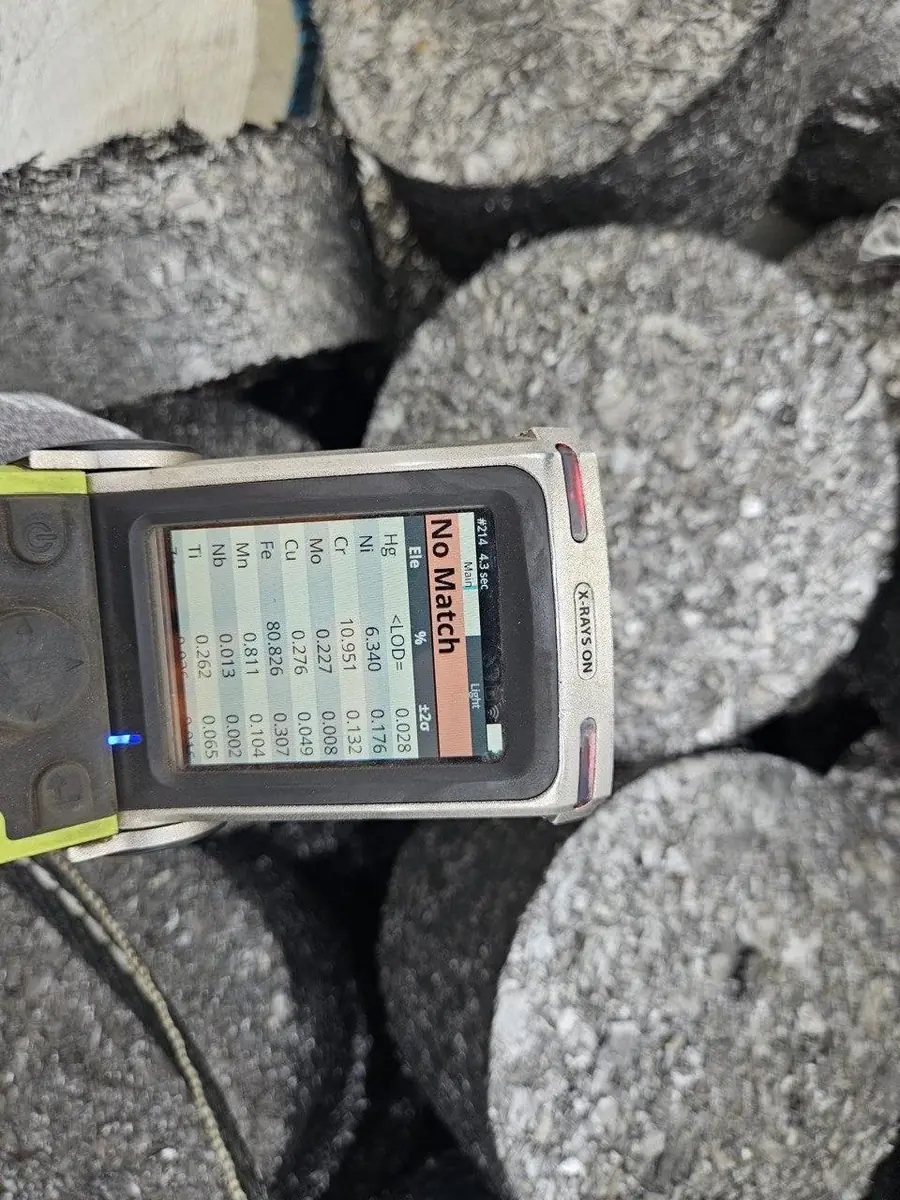
Every lot is measured with a handheld XRF analyser on the pressed face of a finished briquette, not on the incoming swarf. What the buyer receives is what was measured.
Mercury came back below the limit of detection on the sample lot shown here, which is the screening result most buyers ask about first. The reading is supplied with the material, together with the lot reference.
- Elemental composition by handheld XRF, on the finished briquette
- Mercury screening
- Visual check for binder-free, intact pressing
- Additional checks (weight, oil content, density) available on request
Logistics
Briquettes ship in FIBC big bags or loaded in bulk. Bagged material is easier to weigh, stack and count into a lot; bulk suits a full load going to one destination.
- Minimum lot
- Available on request
- Big bag weight
- Available on request
- Delivery terms
- Available on request
- Export markets
- Available on request
- Lead time
- Available on request
Contact
- Address
- RA, Kotayk Region, Abovyan, Nersisyanner St. 16/9
- Reg. No.
- 077191121